
The single most important thing a Texas household can do before a winter storm is check what kind of electricity plan they are on, because that one detail determines whether a cold week costs $120 or $1,200.
Texas operates its own grid, managed by the Electric Reliability Council of Texas (ERCOT). That independence gives consumers real choices, but it also means the state's electricity supply and pricing respond directly to weather-driven demand in ways that most other states do not experience. February 2021 made that painfully clear. Wholesale prices hit the PUCT-imposed cap of $9,000 per megawatt-hour for roughly 87 consecutive hours. Households on indexed or variable-rate plans received bills in the thousands of dollars. Households on fixed-rate plans paid their normal rate.
This article explains what to do before a storm arrives, what to do during a grid emergency, and what warning signs to watch for on your electricity bill.
Understand Your Plan Before Winter Arrives
Texas deregulated electricity plans fall into three main structures.
Fixed-rate plans lock in a cents-per-kWh price for a contract term, typically 6 to 24 months. If wholesale prices spike, the retail provider absorbs that cost, not the customer. As of mid-2025, competitive fixed-rate plans in major Texas metros are generally available in the range of 11 to 14 cents per kWh for average usage tiers, according to the PUCT's Power to Choose database.
Variable-rate plans (also called month-to-month plans) let the provider adjust the price each billing cycle, often tied to wholesale market conditions. There is no cap on how high that rate can go during a grid emergency.
Indexed plans link the customer's rate directly to a wholesale market index, sometimes with a small markup. These offer the lowest prices during calm periods and the highest risk during supply crunches.
If a household is on a variable or indexed plan heading into winter, this is the time to evaluate switching to a fixed-rate contract. The PUCT's Power to Choose site (powertochoose.org) shows all certified plans with their rates. Sorting by fixed-rate plans and comparing the energy charge at the 1,000 kWh usage level gives the most accurate price comparison.
One important note: switching plans takes time. Most enrollments require three to five business days to take effect, and some providers do not accept new enrollments during declared grid emergencies. Do not wait until a storm is already in the forecast.
What ERCOT Emergency Levels Mean for Your Household
ERCOT uses a formal alert system when grid reserves fall below safe thresholds. Understanding these levels tells a household how seriously to take a conservation request.
Watch: ERCOT expects reserves may drop below the minimum threshold. No action is required, but monitoring is appropriate.
Warning: Reserves have dropped below the minimum. ERCOT asks large industrial customers to begin voluntary load reduction.
Emergency Notice (EEA Level 1, 2, or 3): At Level 1, ERCOT deploys all available reserves. At Level 2, interruptible loads are shed. At Level 3, ERCOT instructs transmission distribution utilities (TDUs) such as Oncor, CenterPoint, and AEP Texas to begin controlled outages to prevent a full grid collapse.
ERCOT posts these alerts publicly at ercot.com and through its social media channels. Signing up for alerts from the local TDU (not the retail provider) is the most reliable way to receive outage notices, because TDUs manage the physical wires regardless of who a customer buys their electricity from.
Practical Steps to Take Before the Storm
Preparation done 48 to 72 hours before a storm is worth far more than anything done during it.
Confirm your plan type. Log into the retail provider's account portal or call customer service. Ask specifically whether the plan is fixed, variable, or indexed. If the answer is variable or indexed, check powertochoose.org for available fixed-rate alternatives.
Pre-warm the home. If a grid emergency or rolling outage is forecast, raising the thermostat to 70 to 72 degrees before the event begins stores heat in walls, floors, and furniture. This thermal mass can keep interior temperatures tolerable for several hours without power.
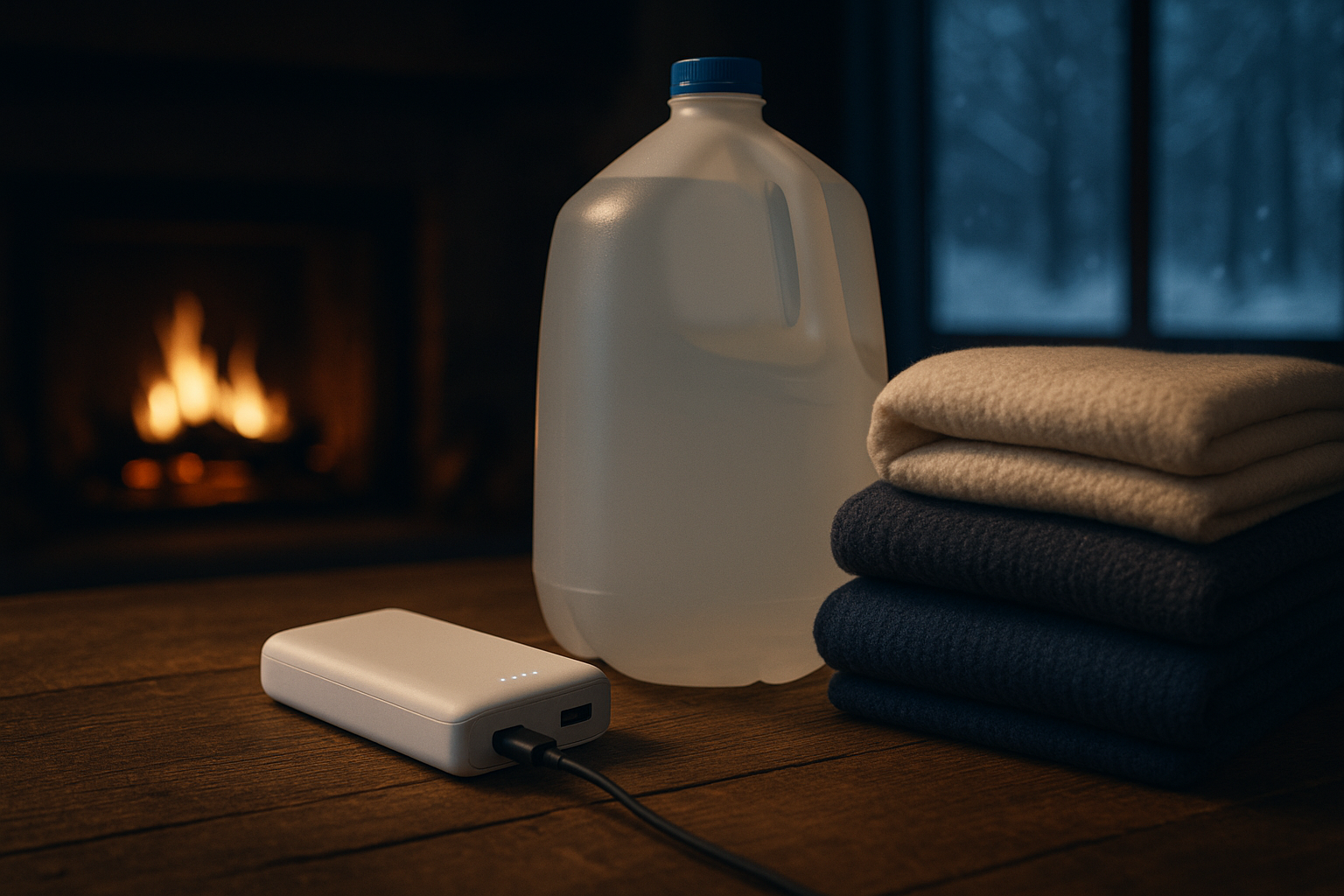
Charge everything. Phones, battery banks, laptops, and any medical device backup batteries should be fully charged before the storm arrives.
Fill prescriptions and stock water. Frozen pipes are a real risk below 20 degrees Fahrenheit. If municipal water pressure drops, stored water becomes critical. The Texas Division of Emergency Management recommends one gallon per person per day for at least three days.
Locate the main water shutoff. If pipes freeze and burst, the ability to shut off water immediately limits damage significantly.
Identify a warming center. Texas counties, municipalities, and the American Red Cross open warming centers during severe cold events. Knowing the nearest location before the storm eliminates a search during a crisis.
What to Do During a Grid Emergency
If ERCOT issues an Energy Emergency Alert or the local TDU announces controlled outages, the goal is to reduce consumption without sacrificing safety.
Reduce the thermostat to 68 degrees or lower if safe. Each degree of reduction meaningfully cuts demand on the grid. ERCOT's published guidance during past emergencies has specifically requested this step.
Turn off non-essential lights and appliances. Large draws like electric dryers, ovens, and dishwashers should be deferred until the emergency period passes.
Avoid running the dishwasher or washing machine. These are not emergencies. Running them during peak demand adds load to a system already under stress and, for variable-rate customers, may cost significantly more per kWh.
Do not use gas ovens or grills indoors for heat. Carbon monoxide poisoning is a leading cause of storm-related fatalities in Texas. The Texas Department of State Health Services records CO poisoning deaths during every major winter weather event.
Check on neighbors. Older adults, infants, and people with medical conditions are at disproportionate risk during extended cold and power loss. A brief check can prevent a medical emergency.
Electricity Price Spikes: What Variable-Rate Customers Should Know
For households already on variable or indexed plans during a winter storm, the billing reality may not become clear until the invoice arrives weeks later. There are limited protections.
The PUCT does set a wholesale price cap (the current systemwide offer cap, or SWCAP, is $5,000 per megawatt-hour as of 2025, reduced from $9,000 after post-2021 reforms). However, retail providers on variable plans are not required to pass savings through during normal times, and they are not required to absorb losses during spikes. The contract language governs.
If a bill arrives that appears inconsistent with the plan terms, the PUCT operates a consumer complaint line at 1-888-782-8477. Filing a complaint creates a formal record and requires the provider to respond. The Office of Public Utility Counsel (OPUC) also provides free assistance to residential consumers disputing bills.
Switching plans after receiving a high bill does not retroactively reduce the amount owed. The time to switch is before the emergency, not after.
When Not to Switch Plans
Switching to a fixed-rate plan makes sense for most households heading into winter. It does not make sense in every situation.
Households already under a fixed-rate contract with an early termination fee should calculate whether the ETF (typically $100 to $200) is offset by potential savings on a new plan. If the remaining contract term is only one or two months, staying put and renewing afterward is usually the better choice.
Households planning to move within 60 days may find a short-term variable plan or a month-to-month fixed plan more practical than a 12-month contract.
The PUCT's Power to Choose tool allows filtering by contract length, so shorter-term fixed options are visible alongside standard contracts.
The Bottom Line
Texas winter storm electricity preparation comes down to one durable principle: remove price exposure before the storm arrives, reduce consumption during the emergency, and know where to get help if something goes wrong. A fixed-rate plan, a charged phone, a known warming center, and a thermostat set a few degrees lower are not complicated steps. They are the difference between a cold week and a costly one.