
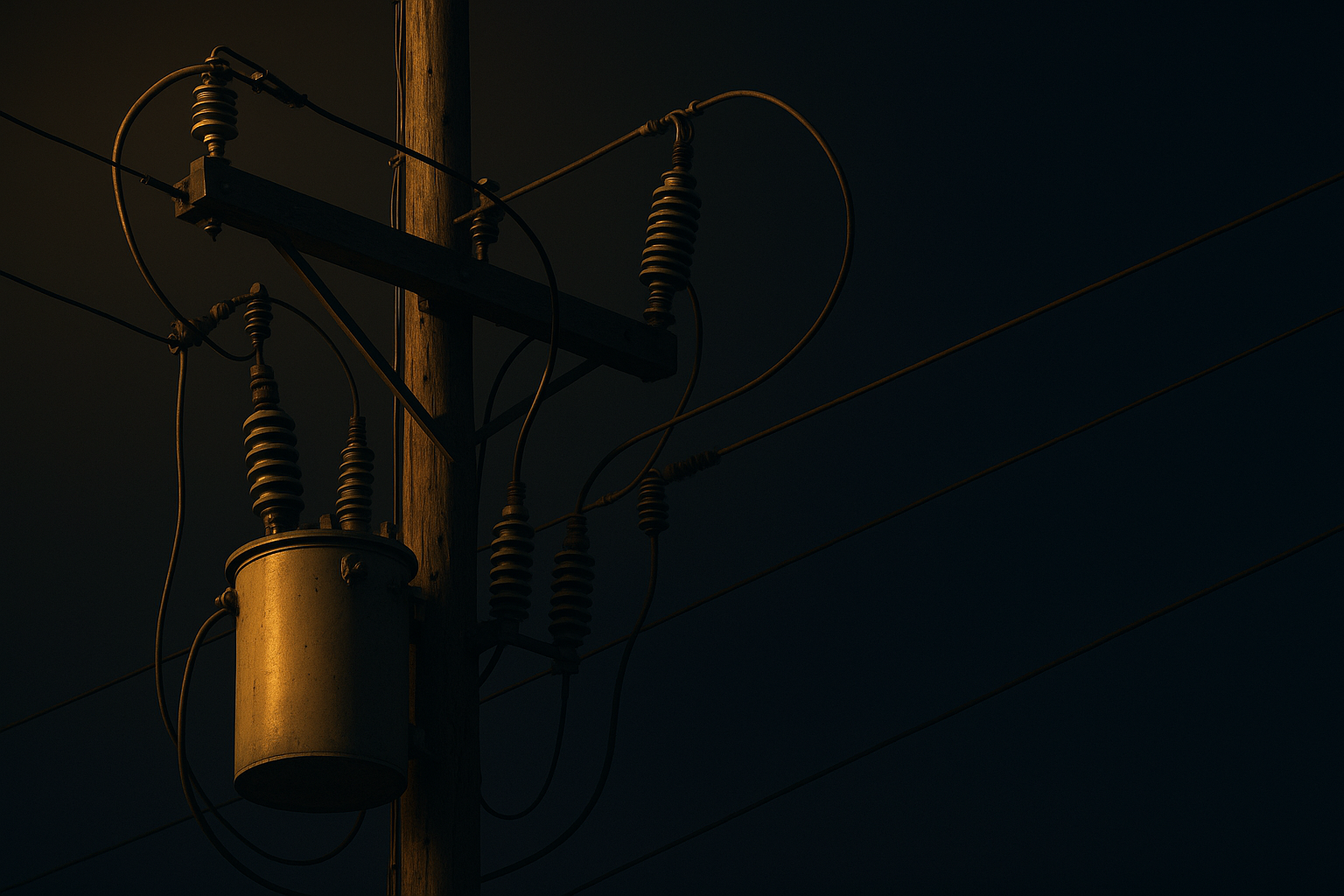

Texas electricity deregulation means one thing at the household level: you choose which company sells you power. The wires that deliver that power, the grid that balances supply and demand, and the transformers on your street belong to separate entities that are not subject to retail competition. Understanding those three entities, and how they divide responsibility, is the foundation for making a good electricity decision in Texas.
What Texas Deregulation Did
In 1999, the Texas Legislature passed Senate Bill 7, which restructured the state's electricity market. Before that law, a single vertically integrated utility (think Reliant or TXU) owned the power plants, the wires, and the customer relationship in its territory. Senate Bill 7 split those functions apart. As of January 1, 2002, most Texas customers gained the legal right to choose which company sells them electricity. That is the entirety of what deregulation means: the retail sale of electricity was opened to competition.
The law did not privatize the physical power lines. It did not create an unregulated market. The Public Utility Commission of Texas (PUCT) serves as the primary regulator, and ERCOT (Electric Reliability Council of Texas) functions as the independent grid operator that coordinates the wholesale market and maintains grid reliability.
The Three Entities Every Texas Customer Should Know
Three distinct organizations touch your electricity before it reaches an outlet. Confusing them is the single biggest source of billing frustration in the Texas market.
ERCOT: the grid operator
ERCOT manages roughly 90 percent of Texas's electric grid (EIA). It does not sell electricity to households, and it does not own any power lines. ERCOT's job is to balance supply and demand on the grid in real time: dispatching generators, running the wholesale energy market, and maintaining reliability standards. When there is a grid emergency, ERCOT issues the orders. When news coverage mentions "the Texas grid," reporters are almost always referring to the ERCOT system.
ERCOT oversees approximately 680 generation units and more than 46,500 miles of transmission lines (ERCOT, 2024 Annual Report). It is a nonprofit, membership-based organization operating under PUCT oversight. Customers do not interact with ERCOT directly and cannot choose it or opt out of it.
TDU: the company that delivers your power
The Transmission and Distribution Utility, or TDU, owns and maintains the physical infrastructure: the high-voltage transmission lines, the neighborhood distribution lines, the transformers, and the meters. When a storm knocks out power, the TDU restores it. Your electricity retailer has no role in outage restoration.
Texas has four main TDUs serving deregulated areas:
- Oncor Electric Delivery (North Texas, DFW metroplex)
- CenterPoint Energy (Houston area)
- AEP Texas (South Texas, Corpus Christi, Rio Grande Valley, portions of West Texas)
- Texas-New Mexico Power, or TNMP (parts of East, West, and South Texas)
Your TDU is determined by your address. You cannot choose it. TDU rates are set by the PUCT and appear as a fixed delivery charge on your bill regardless of which REP you use. As of 2025, TDU delivery charges for a 1,000 kWh month range from roughly 3 to 5 cents per kWh depending on the territory (PUCT rate filings).
REP: the company you choose
The Retail Electric Provider is the company you sign a contract with, the one that sends you a monthly bill, and the one you contact with billing questions. REPs buy wholesale electricity through ERCOT's market and resell it to households and businesses. They set their own prices, design their own plan structures (fixed-rate, variable-rate, indexed, free nights, prepaid), and compete on price, contract length, and customer service.
Texas has more than 100 licensed REPs (PUCT). Some are large national brands; others are small regional companies. TXU Energy, Reliant, Green Mountain Energy, Constellation, and Direct Energy are among the larger ones, but dozens of smaller providers also serve specific markets.
How Electricity Physically Moves to Your Home
The physical flow of electricity is independent of who bills you. The sequence works like this:
- A generator (wind farm, natural gas plant, nuclear plant, solar facility) produces electricity and injects it onto the transmission grid.
- ERCOT balances that supply against real-time demand across the entire system.
- The electricity travels over high-voltage transmission lines to a substation near your community.
- The TDU steps down the voltage through its local distribution network and delivers power to your meter.
- Your REP settles with ERCOT for the wholesale cost of the electricity you consumed, adds its margin and fees, and sends you a monthly bill.
Your REP does not own any of the wires the electricity travels through. Electricity from a particular generator does not flow exclusively to customers of a particular REP. The grid is a shared pool. Switching REPs changes who bills you, not how or where your electricity originates.
Where Deregulation Does Not Apply
Not all of Texas is deregulated. The PUCT states the rule this way: if you live within the ERCOT region and are not served by an electric cooperative or a municipally owned utility, you have the power to choose. Everyone else is served by an entity outside retail competition:
- El Paso Electric (regulated, under PUCT jurisdiction but outside ERCOT, connected to the Western Interconnection)
- Xcel Energy (regulated, serving the Lubbock area in the SPP interconnection)
- Municipal utilities such as Austin Energy and San Antonio's CPS Energy (city-owned, not subject to retail competition)
- Electric cooperatives such as Pedernales Electric Cooperative, which serve rural areas under cooperative governance
Customers in these areas have no choice of REP. They receive service from a single provider at rates set by the governing authority, whether that is the PUCT, a city council, or a cooperative board. To confirm whether a specific address falls within a deregulated area, enter the ZIP code on PowerToChoose.org, the PUCT's official plan comparison website. If plans appear, the address is deregulated. If no plans appear, the address is served by a regulated or municipally owned utility.
What Deregulation Means for Your Monthly Bill
A Texas electricity bill in a deregulated area has two main cost components.
Energy charge: Set by your REP. This covers the wholesale cost of electricity, the REP's margin, and any plan-specific fees. It is the only component of your bill affected by switching providers.
Delivery charge: Set by your TDU and approved by the PUCT. This covers the cost of maintaining the wires and meters. It does not change regardless of which REP you choose.
The average retail electricity price in Texas was approximately 13.2 cents per kWh in 2024 (EIA, Electric Power Monthly, November 2024). Delivery charges account for roughly 3 to 5 cents of that figure. The remaining 8 to 10 cents reflects generation cost, REP margin, and other supply-side fees. A common misconception is that switching to a cheaper REP eliminates all fixed costs. It does not. TDU delivery charges are identical for all customers on the same meter type in the same territory.
When Switching REPs Makes Financial Sense (and When It Does Not)
Switching REPs is worth the effort when a fixed-rate plan is available at a materially lower price than the current contract, or when the current contract is expiring and an automatic rollover to a high variable rate would otherwise take effect.
Switching is not advisable in every situation. Customers on a fixed-rate contract with 12 or more months remaining should calculate the early termination fee before acting. Many early termination fees run $150 to $200 (PUCT-filed Electricity Facts Labels). If the projected savings over the remaining contract term are less than that fee, staying put is the better financial outcome.
Customers should also compare plans at the same usage level. Texas law requires REPs to disclose the total price per kWh at 500 kWh, 1,000 kWh, and 2,000 kWh usage on the Electricity Facts Label (EFL), a standardized document regulated by the PUCT. Many plans with low advertised rates include bill credits that activate only at specific usage thresholds, making those plans less competitive for households that consume significantly more or less than the qualifying amount. Reading the EFL before signing any contract takes two minutes and prevents most plan-selection errors.